Skip to Content

“Inner” Vitamins for Massage Therapists


Minimum daily requirements for "outer" vitamins

Minimum daily requirements for "outer" vitamins

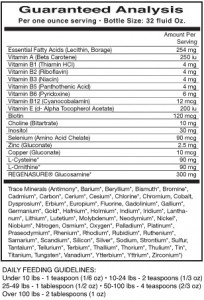
Recently, while preparing for a 2-week teaching road trip teaching, I was packing multi-vitamins and noticed the label.  As a massage therapist, you understand the need for vitamins every day.  But are you aware of your minimum daily requirements for inner vitamins as well? 

I’m referring to qualities like appreciation, for example.  The word “vitamin” didn’t appear in Webster’s dictionary until 1912.  For centuries we didn’t understand these “organic substances that are essential in minute quantities to the nutrition of most animals.”   That’s Webster’s talking.  For centuries, we also didn’t know the need for analogous emotional substances.  Fortunately, as professional nurturers you do.  Perhaps by 2012, MDs will  recognize the role they play in keeping us healthy.


“Inner vitamins” are available through a terrific two-minute process that involves you and another person.  You can do it with clients to connect to them deeply.  Here’s how to get vitamin A1 (Appreciation): appreciate the person you’re working with, while she says, “Thank you.”  You may need to remind her not to say, “If you knew me better you’d never say such nice things.”   The process looks like this:


You: “Something I appreciate about you is your commitment to personal growth.”


Her: “Thank you.”


You: “Something I appreciate about you is how you care about people.”


And so on.  After a minute, have her acknowledge you.  (As an LMT, you’re a professional giver, so it’s likely you have a tough time receiving—especially appreciation.  Being comfortable taking in appreciation helps you become at ease  taking in money.)   It looks something like:


Her: “Something I appreciate about you is your dedication to helping people heal.”


You: “Thank you.”

Her: “Something else I appreciate about you is your deep therapeutic massages.”


Then thank each other for providing your minimum daily requirements of appreciation.  


Vitamin A1 isn’t t the only inner vitamin you need each day. Others include Vitamin E1 (Enthusiasm); Vitamin H1 (Happiness), Vitamin H2 (Hugs); Vitamin K1 (Kindness); Vitamin L (Love); and Vitamin R (Respect).   If you’d like real health, add these essential inner vitamins daily with the people in your life—from your mate and kids to co-workers and clients.  If you live alone, you can do this on the phone.
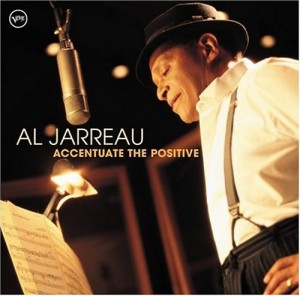
Accentuate the Positive

Al Green's album "Accentuate the Positive"

“You’ve got to accentuate the positive
Eliminate the negative
Latch on to the affirmative
Don’t mess with Mr. In-between.

—Johnny Mercer

Long ago, Broadway’s Tin Pan Alley offered such advice to Americans who wanted success in love and business.  It’s as true today for those who want to succeed in life and massage.

Most LMTs call their work a “practice.”   If you want to “practice” massage practice on my back.  If you want a massage business, I’ll show you how to change the limiting attitudes about money kicking around in the cellar of your subconscious mind that hold you back.

As the business coach for massage therapists, I teach an LMT that a powerful way to accomplish this transformation is by rewiring your mind through affirmations.  It’s critical to release negative thoughts preventing success.  In coaching 150 LMTs, I’ve discovered four common thoughts.

1. Healing is pure; money is dirty.
2. Doing massage is so enjoyable, I don’t need to get paid much for it.
3. Marketing?  I have a massage license, not an MBA.
4. If my business gets too successful, I’ll burn out.

These limited messages must be released to take your massage business to the next level.  Let’s now heal that second thought: Doing massage is so enjoyable I don’t need to get paid much for it.  I recommend the following affirmation: “When I do the massage work I love, the world is enriched and so am I, as clients and money flow to me quickly.”

Write the affirmation as 1A, then the negative response it elicits underneath as 1B. Suppose the negative thought that emerges is: “If I do the massage work that I love, not enough people will come.”

Write the response without judgment.  Underneath, as 1C, create a new affirmation to treat this response. A good one is: “The same force of Nature that helps my clients heal on the massage table supports me in bringing people to that table.”

Writing the resistance releases it from your being. I recommend doing this process for 10 minutes a day until its truth manifests. Each repetition has three parts.  Writing these affirmations daily can help get more clients onto your massage table, and put more food on your dining table.

When the Going gets Tough, the Tough get Massaged

The overwhelming majority of LMTs I’ve encountered—now in the  thousands—do not think successfully. A business coach for massage therapists, I tell clients that a slowed down economy is not a problem for  massage therapists. The problem is how a massage therapist thinks, speaks, and acts about it.

During the Great Depression, the movie business thrived because Hollywood offered relief from daily worries.  If massage therapy doesn’t offer that—plus pain removal—then I’ll eat my hat—and I’m not a “hatatarian.”

The massage therapist who understands when her client says he needs to cut down or cut out massage, is an LMT who might soon need a job.   The massage therapist who makes her client understand that, in a recession, where stress and fear are rampant, one must spend money on staying empowered and motivated—or else fears will pull one into a deeper spiral.  The LMT in this economy must be a bodyworker and a lighthouse illuminating the way for those in darkness around her.

The Chinese ideogram for disaster is the same as the one for opportunity. If an LMT sees this economy as a disaster, she’ll likely find her business  dropping. The one who sees it as an opportunity will likely succeed.  Thank goodness we have the choice to choose.

Buy One Massage, get One Free

Restaurants, shoe stores, bookstores…these days it’s hard not to find an ad for a “Buy one, get one free” offer.   Oh, sure, you don’t see such ads for medical practices, auto dealers, and massage therapists. It’s understandable why MDs, uncomfortable about advertising, aren’t running such specials.  But massage therapists?  There’s no really good reason why they’re not doing it.

For a few hundred dollars worth of advertising, a number of LMTs employing this strategy received ongoing clients—some of whom might be worth many thousands of dollars during the course of their relationships with these therapists.  To make this promotion successful require the new client to receive that free session within a week of the first.

Consider the advantages of the offer:

1. New people experience your work for half the price they normally would, particularly appealing during a recession.

2. New clients pay full price for their first massage from you, which psychologically important for you.

3. New clients get two massages from you and in two weeks.

4. The second massage is free.  Human nature being what it is, the tendency to feel obligated to the therapist is very real, perhaps inspiring the client to book a third massage.


Cary Bayer, the Business Coach for Massage Therapists

Cary Bayer, the Business Coach for Massage Therapists

The peaceful state that accompanies a massage is far more subtle than a sloppy Big Mac or an eventual sweaty pair of Nikes, each of which can also be purchased on a buy-one-get-one-free basis, so some LMTs might feel odd compared to such multinational giants.  But for a massage therapist to be associated with companies, with the two most prominent logos in marketing history can only be a good thing.

Creating a Win//Win/Win Sales Referral Program

cb best shot

Your clients are the unheralded resource of your sales team.  A study of referral programs that I conducted among some 200 massage therapists reveals that the average therapist sends a thank-you note to the person doing the referring and a discount of about $7 off that person’s next session. Analysis reveals that the average client comes about once a month and remains a client for about three years.  At $60 per massage, that’s $720 per year or $2160 over three years (not counting the additional referrals that new client can bring).

A referral, therefore, brings $2160 in new business and the therapist sends a thank-you card and $7 coupon.  Is this any way to run a business? Here’s a win/win/win appropriate way to conduct a client referral program.  Continue the use of the $7-off the next treatment and thank-you card, but in the card, indicate that, in 6 months, another thank you will come.

Half a year later, after analyzing the revenue the new client has added to your business, send a check for 10 percent of that total to the client who referred.  Accompany the check with a second thank-you note, and in it indicate that you strongly believe in win/win/win scenarios.  Explain that the new client wins because he gets regular massage; you win because you’ve received added revenues; and the person to whom you’re sending this thank-you note wins with this check. Tell her to use the money any way she wants: for a facial, a gift for a loved one, or a donation to her favorite charity.  The choice, of course, is hers; it’s her money.

How to get Massage Clients to see you Weekly

Cary Bayer, The Business Coach for Massage Therapists

Cary Bayer, The Business Coach for Massage Therapists

There’s no time a client appreciates massage more than the moment he leaves your table.  In my role as business coach for massage therapists, I polled some LMTs I started working with, and was astonished to discover that most failed to take advantage of this ripe moment.  I’ll explain.

The first question to ask a client who’s leaving your room is, “How do you feel?”  Most therapists do.  Clients usually reply, “Great.”  What almost all therapists fail to ask at this moment is the critical follow-up question–“Would you like to feel this great next week as well?”

This is a two-part question; the first part’s a no-brainer, because  everyone wants to feel great.  If he normally sees you every four weeks, coming in the following week can be challenging on one or two fronts:

A) Can he financially afford it?

B) Does he think he deserves such peace?

Too many therapists make the error of taking responsibility for a client’s financial decisions.  So I’ll say it simply, “The person in charge of your client’s financial decisions is your client, not you.”  If he can afford it, he may book a session the following week, if he can’t, he won’t.  You might be able to help him here if you take credit cards that allow him to pay in the future for the treatment he receives the next week.

As for deserving, help your client see he deserves to feel good—often. You’re a body worker and growth facilitator, inspiring clients to live in greater peace.  You’ve nothing to lose by asking your clients if they want to feel great the following week.  As Jesus said, “Ask and you shall receive.”

How to Get New Clients through a Massage Sale

Cary Bayer, The Business Coach for Massage Therapists

Cary Bayer, The Business Coach for Massage Therapists

There’s great wisdom in children’s nursery rhymes so let’s adapt one for massage therapists: This little therapist went to market (and brought home many new clients).  This little therapist stayed home (because she’s uncomfortable “marketing,” and hoped clients would come to her).  This little therapist had roast beef.  (Vegetarians substitute tofu.)  And this little therapist (the first, that is) ran all the way home (to the bank).

Marketing wasn’t taught to you when you heard bedtime stories—they weren’t taught much in massage schools, either.  But as a child you knew about money, and if mommy wouldn’t buy that toy for $10, when it got reduced to $5, you reminded her of the bargain.

Fast forward decades; now you’re a gifted LMT.  If you’re good, clients will return to your table.  But how do you get more of them there in the first place?  That’s the $64,000 question I’m often asked in my role as business coach for massage therapists.  There are many ways to do that.  One surefire method—particularly for anyone new to an area; anyone who’s just added a new modality; or for any practice with a new therapist–works equally well for businesses in different industries.  You’ve no doubt seen restaurants and stores in their first few weeks with grand opening signs, bunting still blowing in the breeze, and introductory prices.

Can you resist a 50 percent off sale?  Imagine a $60 massage marked down to $30.  Chances are good you’ll attract many people who get massaged regularly, but will try you out because of the sale.  If they like you they may switch to you. You’ll also attract new people to massage, who can become regular clients.

If you get a new client from this strategy who sees you once a month for three years, that client will be worth nearly $2200—and that doesn’t include her referrals. If you could get $2200 in new business by investing just $30 (the discount for an introductory session) wouldn’t you be willing to do it?  So what’s stopping you?

How to Keep Massage Clients Loyal & Coming Back

Cary Bayer, the Business Coach for Massage Therapists

Cary Bayer, the Business Coach for Massage Therapists

Two years ago, my wife and I flew from Ft. Lauderdale to Los Angeles, to Melbourne, and Singapore, then to Bangkok, and back to Melbourne, L.A, and Florida. The remarkable thing about this exotic, long-distance itinerary was that each leg was either first or business class, and it didn’t cost me a dime.  They were all “paid” by American Airlines, or by a partner in its Frequent Flyer Program.

American runs a program to reward loyal customers.  All carriers know you have many flying options—they say that as you “deplane”–and  they’re grateful you chose them.  To reward you for that, and to inspire you to come back, all carriers run such programs to give you free flights.  Restaurants, bookstores, and other industries have similar programs.  Why shouldn’t massage therapists?

In my role as business coach for massage therapists, I suggest incorporating a Frequent Massage Program to reward loyalty.  I recommend giving a free massage to clients after they’ve had 10 sessions they’ve paid for at the one-at-a-time fee.  In many industries, businesses give 10 percent finders fees to those who refer clients . There are several millennia of history in spiritual circles for 10 percent giving back, as well.

Logistical monitoring can be done with a card that’s clipped or signed, or you could record each session in the client’s file.  After that ninth session, you can be sure your client will book session number 10 as soon as possible; that’s because number 11 is on the house, and he can’t wait to get his free massage.   Your clients will love you for this, and they’ll fly your friendly massage skies for years to come.